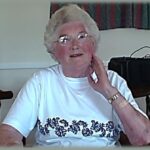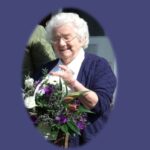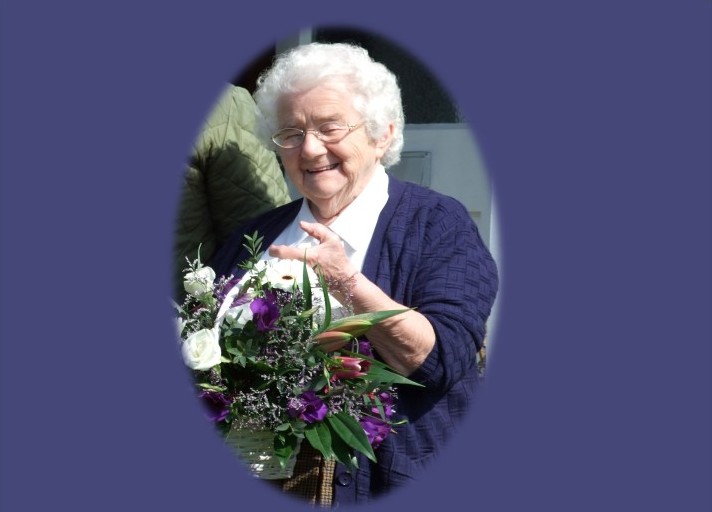
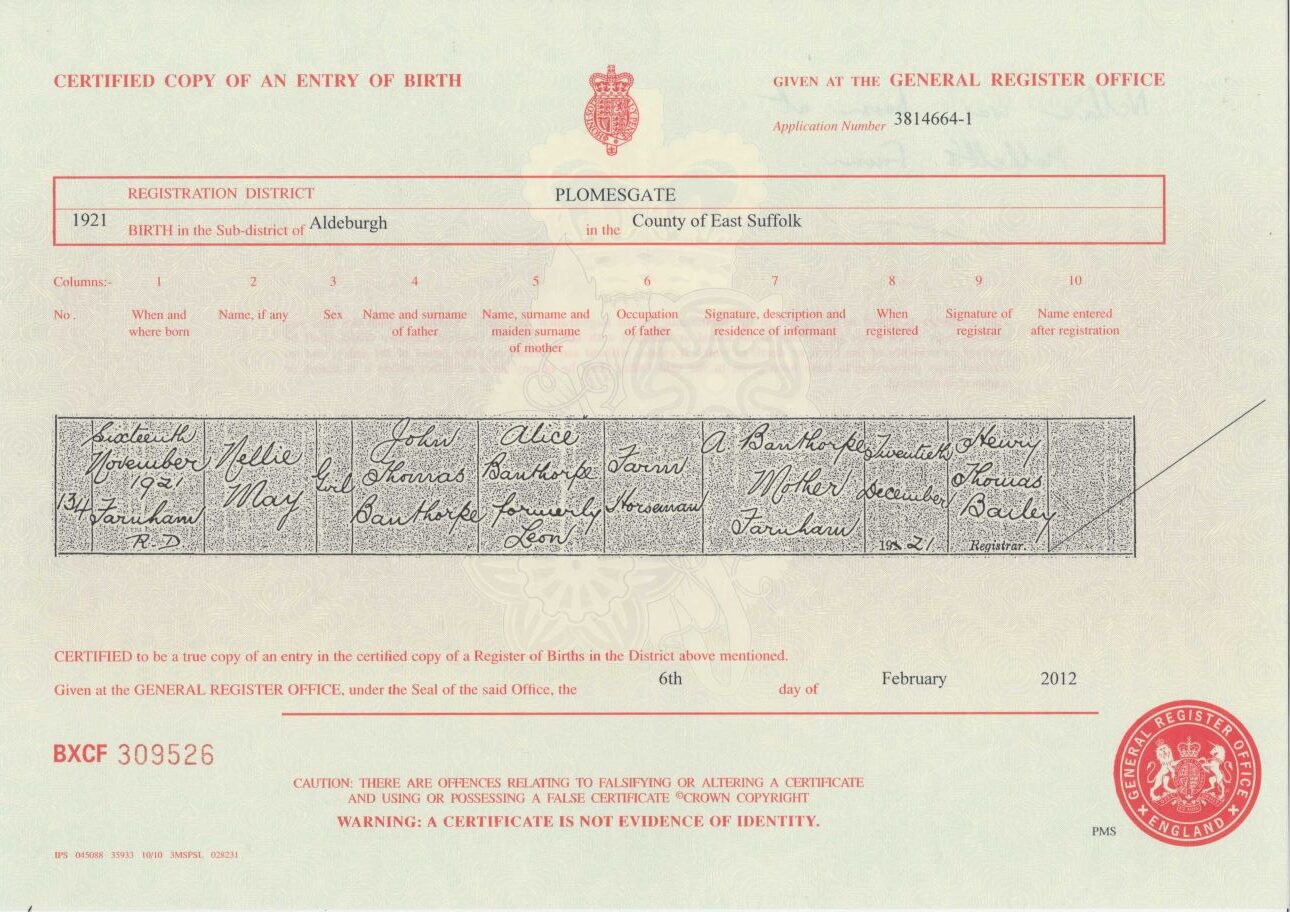
Nellie May Banthorpe was born on 16th May 1921 in Farnham or Benhall, as she was born at Mollett’s Farm which straddles both parishes. Her father was horseman on the farm.
Known as Nell she met her husband Jesse Friend in 1938 when she was in service at Kelsale. Evidently when they wanted to meet up, to avoid anyone hearing their footsteps on the gravel, Jesse would climb the garden fence. On the 1939 Register she was a domestic servant for Henry G Crisp, the Stationers at 26 High Street, Saxmundham.
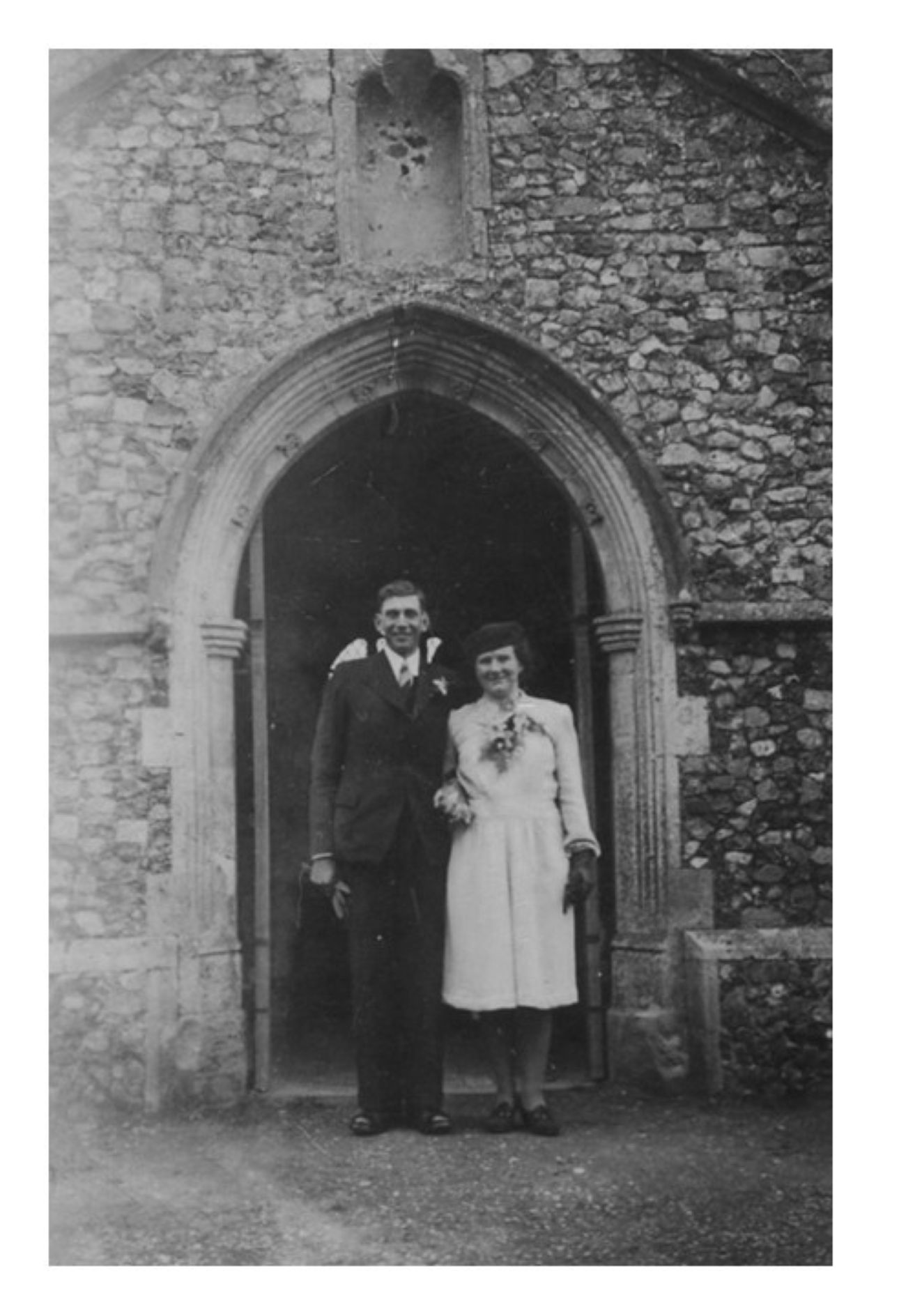
The couple’s wedding plans were nearly jeopardised by Nell being called up into the WAAF’s, where she served for a year and a half. They were married at Benhall Church on 17th April 1944 when she was given ten days leave. For a honeymoon they took the bus to Stradbroke, and stayed for a few nights in The White Hart.
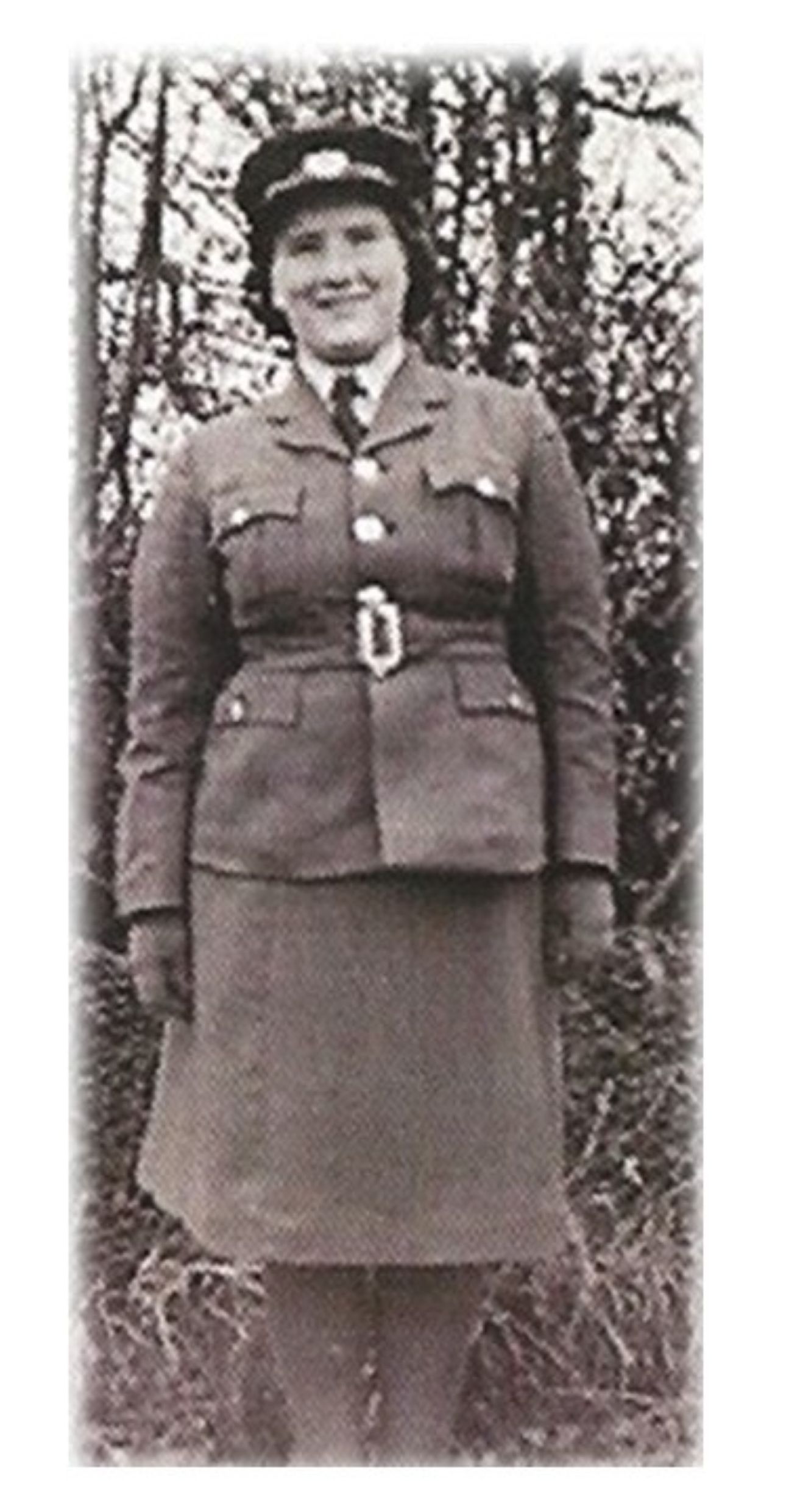
Left: Nellie May Banthorpe in WAAF’s uniform.
Above: Nellie Banthorpe & Jesse Friend’s wedding at St. Mary’s Church, Benhall in 1944.
When Nellie’s wartime service ended, they moved to Melton and came to Benhall in 1952 when Jesse got a job at Manor Farm, working for Mr Pepper.
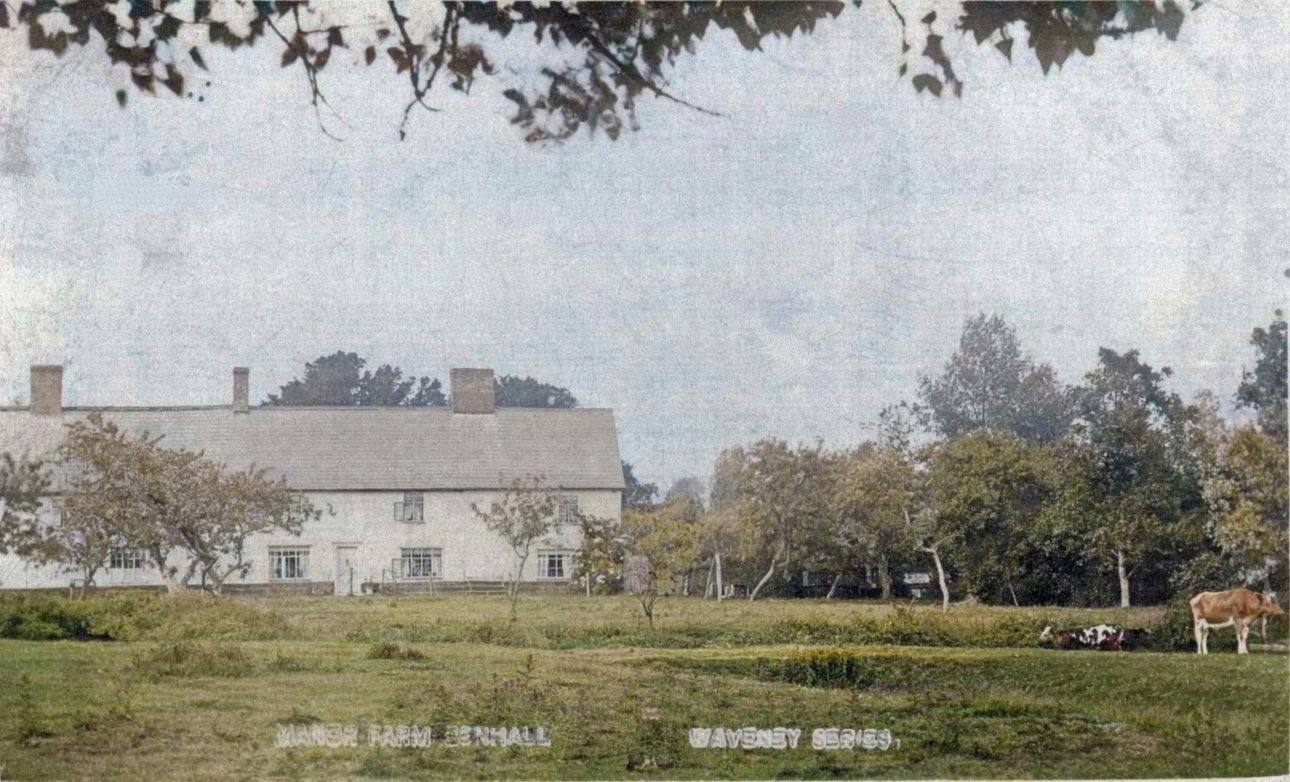
Manor Farm, Benhall Green where the Friend family lived.
From son John Friend’s memories of life at Manor Farm:
Monday was wash day with Copper & Daz.
Tuesday was the day for ironing with a flat iron.
Wednesday was shopping day by bicycle!
Thursday was spent cleaning floors and mats.
Friday was baking day, rusks, madeleines, jam tarts and sometimes a Victoria sponge.
Even by standards of the time the facilities of the house were somewhat primitive. There was no electricity and no running water. Water was carried in a bucket from a hand pump which was in the other half of the house used as a dairy to process cows’ milk.
The lavatory was a purpose brick-built building half-way down the back garden with an appropriately shaped wooden seat. The paper used was torn from pages of old editions of the East Anglian Daily Times, at a time when the paper was moistened, the print ran. There was a bucket underneath which needed regular emptying.
There was always a plentiful supply of tasty vegetables from the garden
At night to save a dark, chilly, and sometimes wet journey out to the garden, ‘Gesunders’ were slid under the bed.
A more modern, but basic structure, made of wood, less old than the main house, was a lean-to building attached to the house known as the scullery. This room contained the copper, a sink and mangle. The floor was of not-too-even flagstones. When it came to wash day, always Monday, the copper – a large dish-shaped container in a brick-built surround with a fireplace underneath – would be half filled with water and the fire lit. When the temperature of the water rose sufficiently washing powder (Daz) was added together with the dirty clothes and linen. The washing was frequently prodded with a thick, well-used shaft of wood. When one load was washed, it was transferred to a nearby Butler sink to be rinsed before passing through a mangle and then hung out to dry on the linen line in the garden. The copper was topped up with fresh water, the next load of washing was added to the slightly dirty water, and the process repeated.
This routine continued until mains water supply was connected.
Nellie was also known for her sense of humour and her poems which were recited at Music, Mirth and Much More shows held at Benhall Club. They were collated into a book, the Size 9 Boots a favourite. She had a dozen books published which she gave to the family and one or two others. Here are 3 examples of her poems. Click on each one to enlarge,
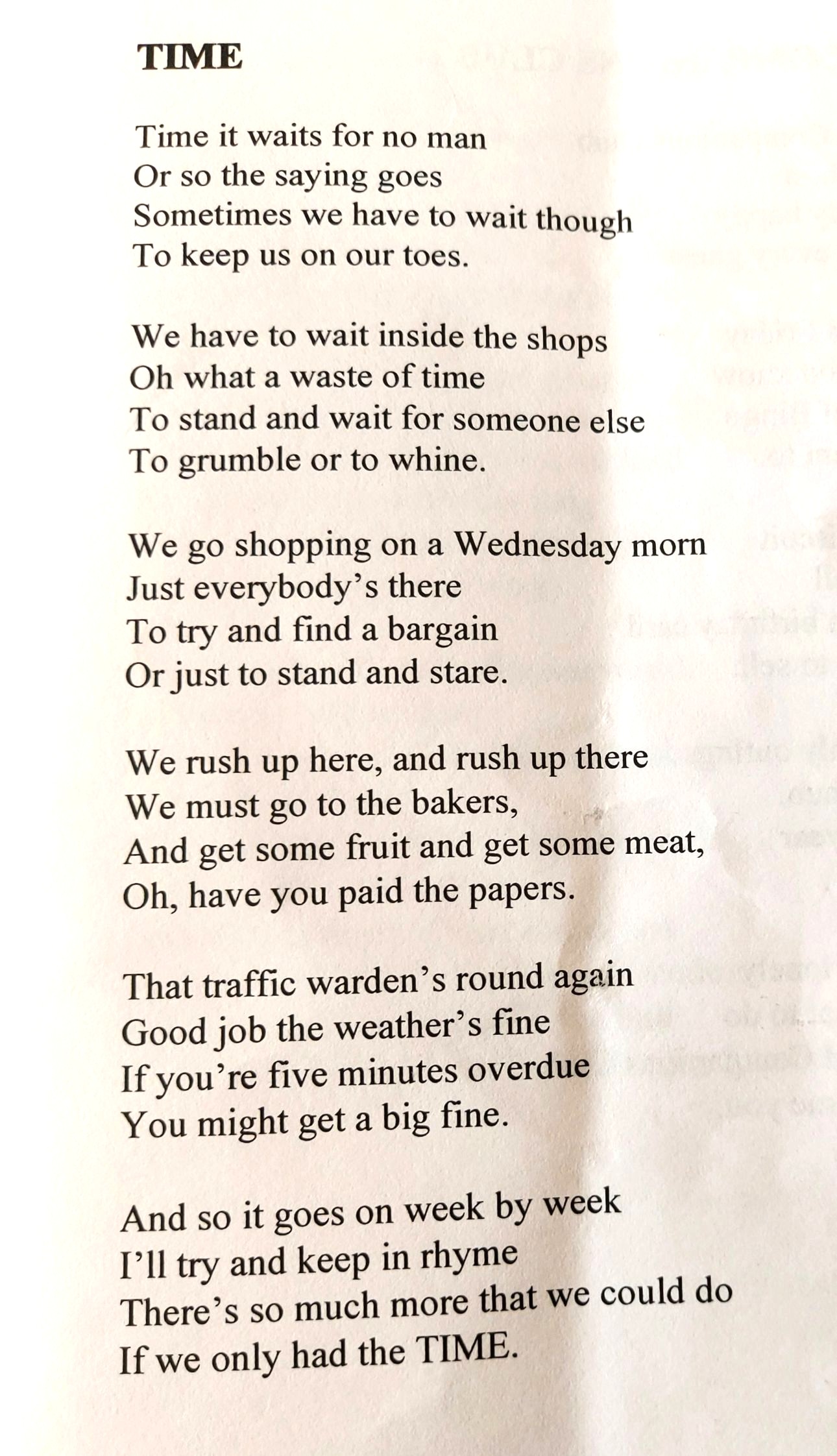
Time
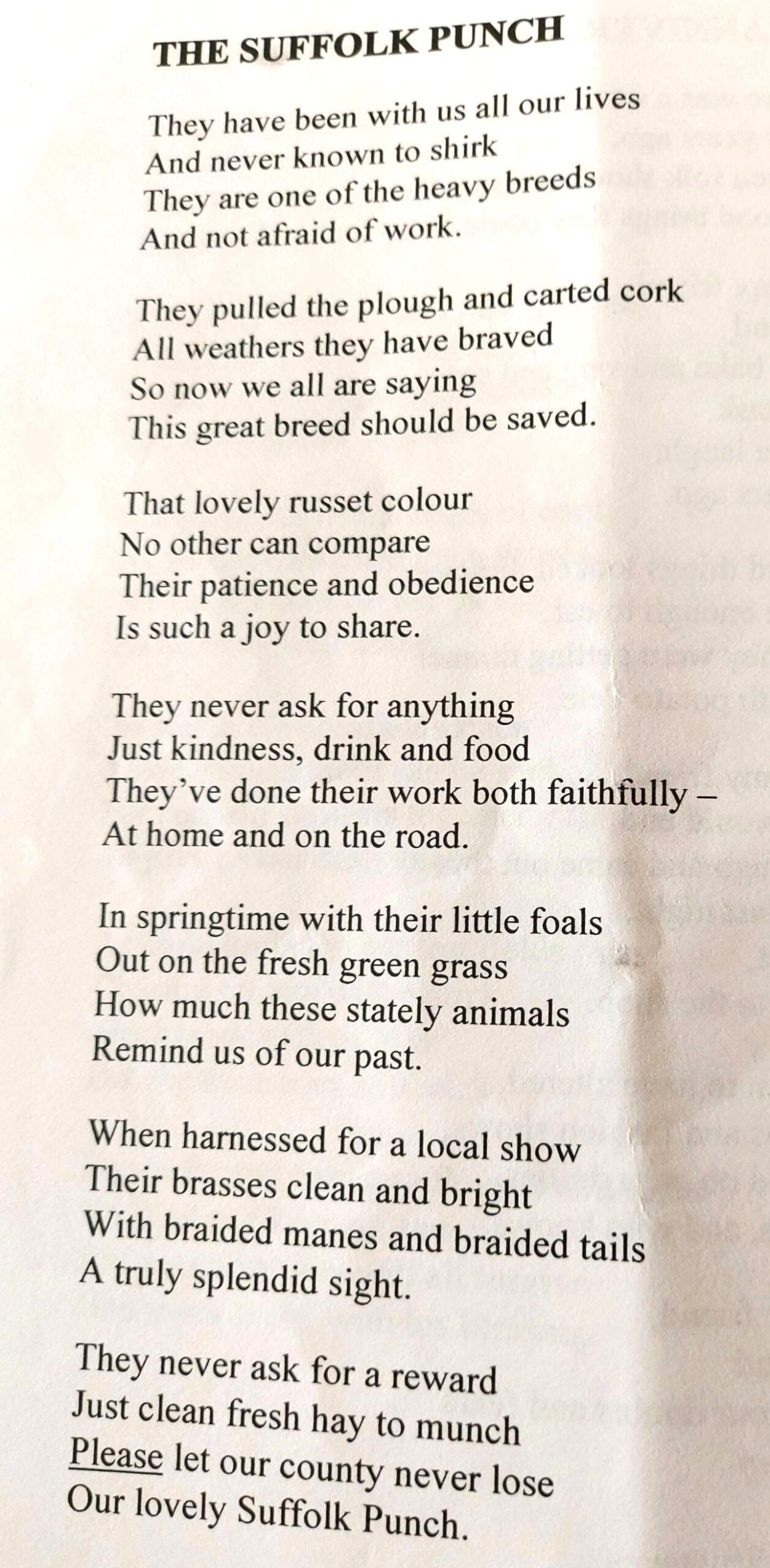
The Suffolk Punch
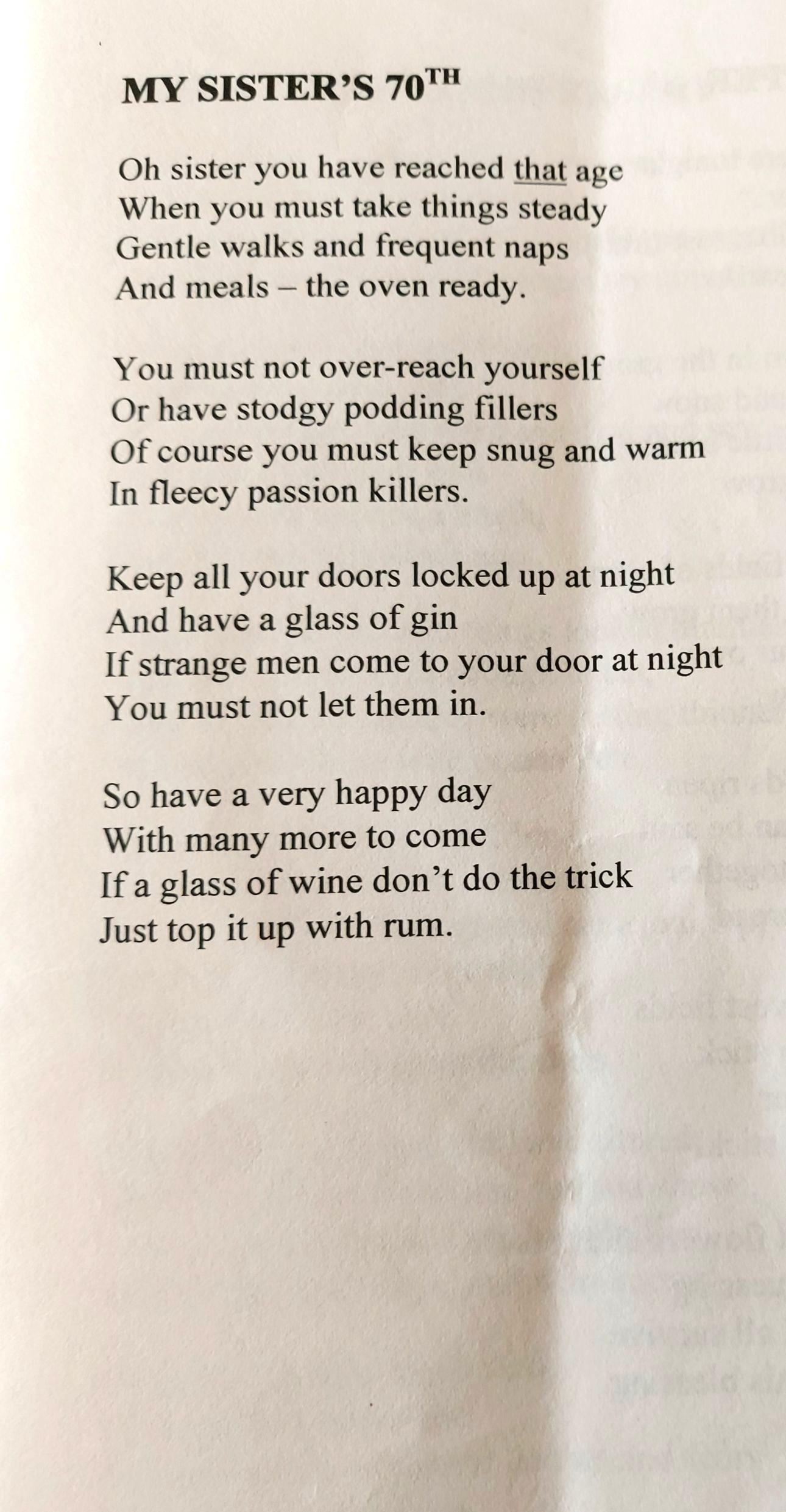
My Sisters 70th
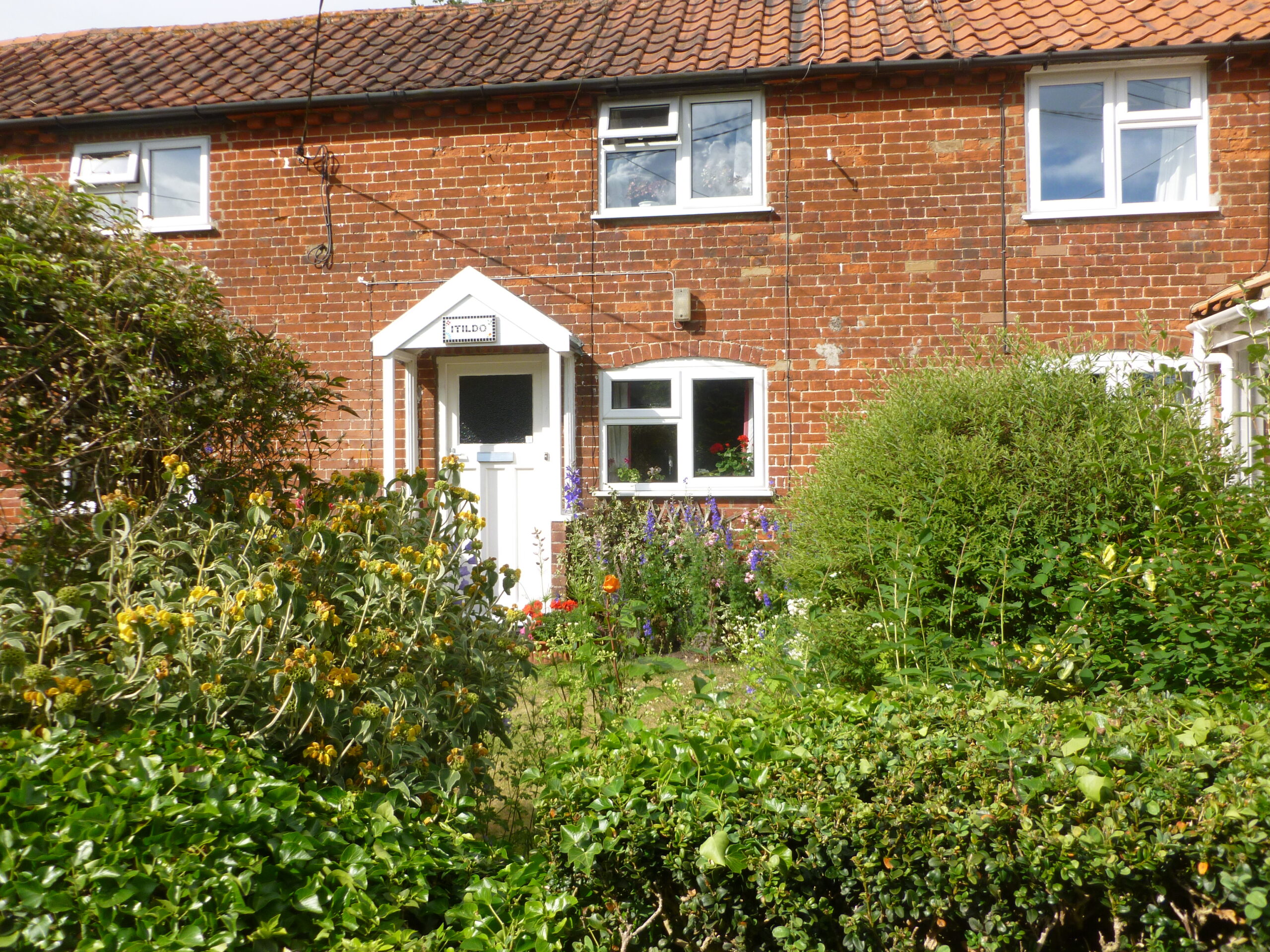
For a time in the 1960s and 70s, they were in Campsea Ash and Marlesford, returning to Nellie’s parents’ home in Benhall when Jesse retired. Their house in Benhall was called ITILDO, as in ‘it will do’!