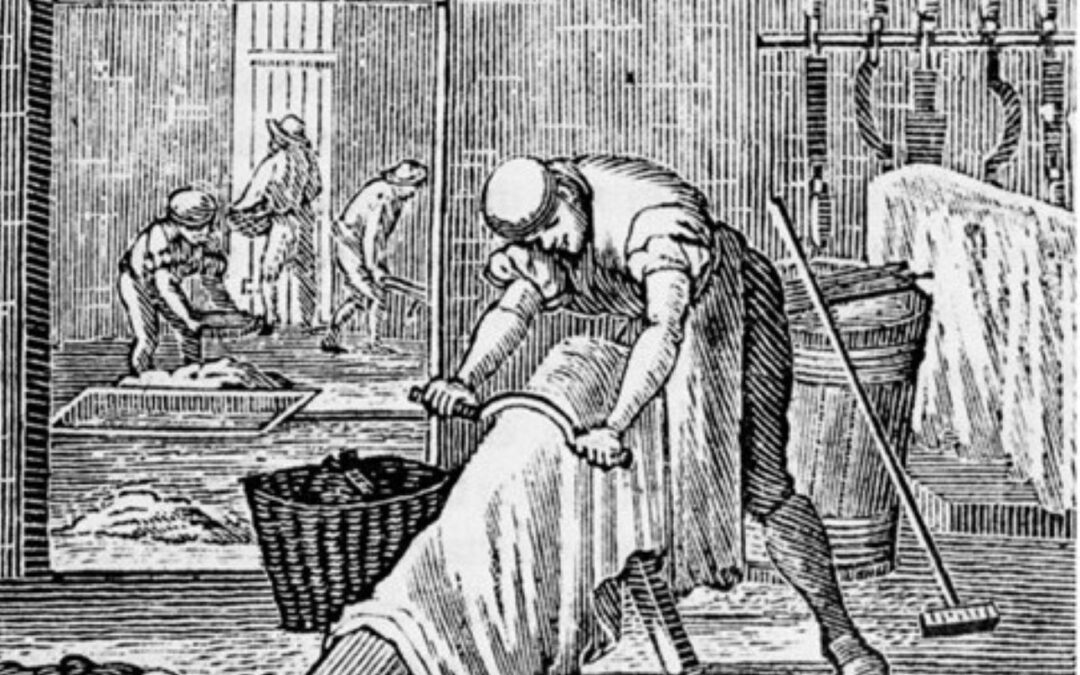
Above image dated 1790 shows the Tanner in the back, the Currier in the fore. Courtesy Library Company of Philadelpia
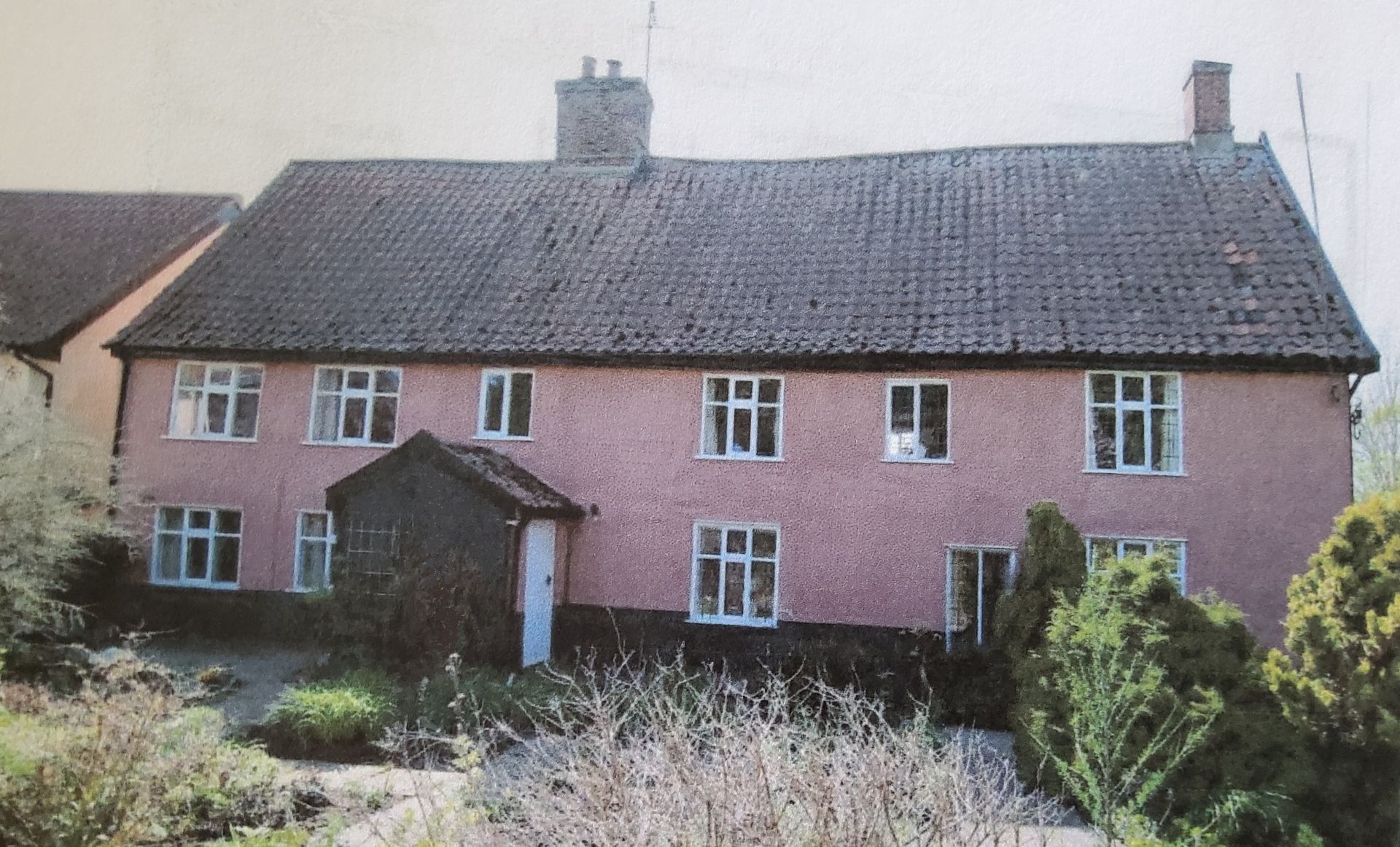
The Old Tannery, Sternfield
According to a Heritage Assessment made in 2016, the Old Tannery was built in the late 1600s as “a single dwelling of some substance but has been divided into three or more cottages by the time of the 1838 tithe survey.”
Known Tanners in Sternfield
Philip Knights (1651-1705)
John Blomfield, Tanner after Philip Knights until 1760
From the book by Rev. James Havet dated 1726:
John Blomfield, the Tanner occupies the farm belonging to the Tanner. When I came first to the living Philip Knights, Tanner had only the arable land now posted and railed in, parted in the middle with the hempland & meadow adjoining to the stables for which he paid me.
It seems that a local tanning industry was in evidence in Sternfield until at least 1760s.
What does a Tanner do?
A tanner transformed animal skins into leather through the process of treating hides with tan or tannin (powdered tree bark) hence how the profession got its name.
Leather was used for so many purposes: hats, gloves, shoes, jackets, jerkins and breeches were probably made from locally-tanned animal hides, as well as leather bottles and buckets, saddles and harnesses, which were everyday necessities in the farming community.
It was an important trade and the area around Sternfield would have had many of the essential ingredients for tanning: an abundance of oak trees for their bark, hides from surrounding farms, water from local rivers and the availability of lime.
From the 1827 edition of The Book of English Trades:
All tanned leather is classed into two denominations: namely hides and skins. The hides being commonly larger animals such as bulls, oxen, cows etc whose skins are chiefly intended for the soles of stout shoes and other purposes requiring very thick solid leather; while skins refer to calves, seals etc which being thinner and more flexible are intended for the upper leather of shoes and boots, saddles and harness.
First the Tanner had to obtain a supply of hides. The animal skins were first soaked and scraped to remove the hair, flesh and fat. Skilled workers were needed so as to not damage the hide.
Once the skin had been cleaned, they underwent the ‘liming’ process, where it was repeatedly washed and left in a solution of quick lime to increase absorbency so it more readily accepted the tannin.
The tanning process using Oak bark:
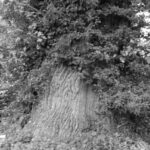
The solution used for tanning was traditionally made from oak bark. The best bark came from the young trees of twenty years growth. Stripping was mainly done in the spring when the sap was rising. The bark was levered off, and then stacked in the dry before being ground at a local mill and packed into sacks.
Oak bark from this region of Suffolk was highly prized by tanners because of its high tannin content.
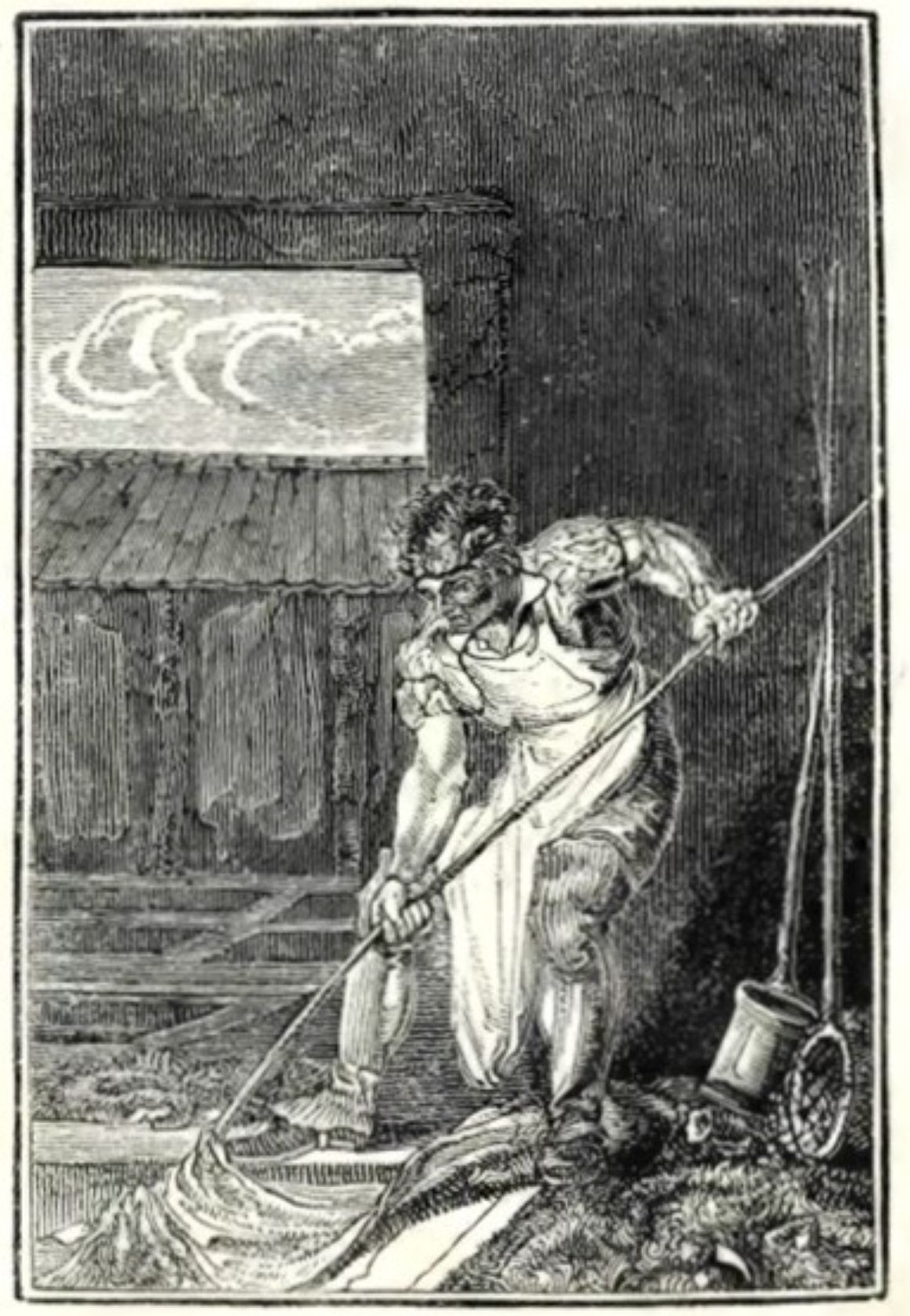
The Tanner from the Book of English Trades
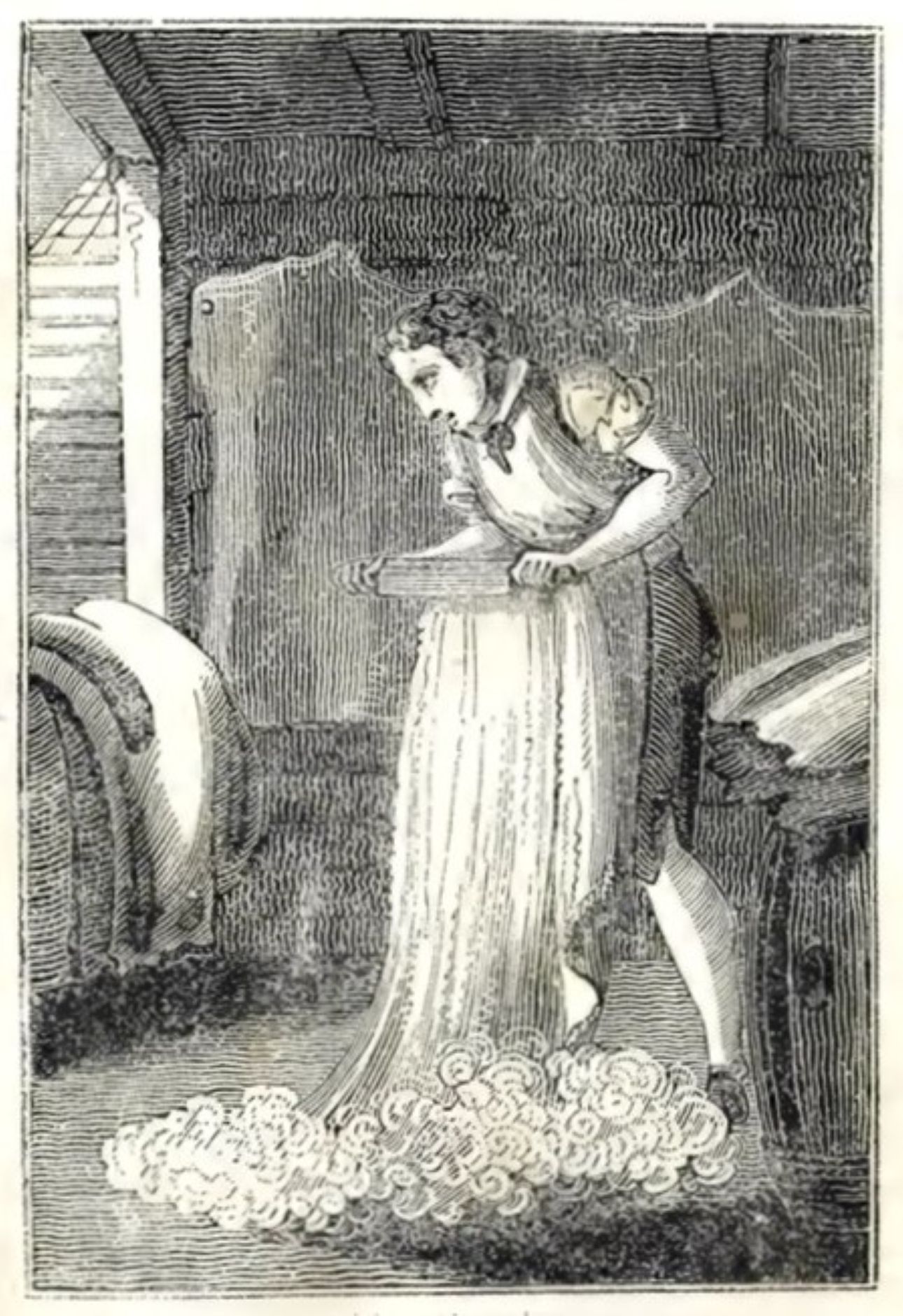
The Currier from the Book of English Trades
The tanning process occurred when the skins were placed into a pit in the ground, where a quantity of ground oak bark had already been laid. On this the skins and fresh bark were placed in alternate layers before covering the whole with the tanning fluid (bark and water), and treading it well down. Here they would be left for some time, four to six weeks depending on the thickness of the hides or skins. This process could be repeated several times with the liquid being drained and fresh bark laid and the same process repeated, until the right tanning depth was reached.
Afterwards they are taken out of the pits and suspended on poles to dry ready for sale in market or to a Currier who prepared them for use by shoe makers, coachmakers, saddlers and book binders.
Tanners were obliged to take out an annual licence from the board of excise so the trade of a Tanner required considerable capital, a large yard, sheds and pits and plenty of water.
From Probate record made after the death of Philip Knights, Tanner, in January 1705:
90 backs with bark allowed for tanning them up
62 grained hides with bark also allowed for tanning the up
4 Red Soles with bark also allowed
15 horse hides
13 hindrings
3 dozen (36) Caloos skins and 5 small ones
17 cow hides, 2 horse hides & 4 skins in the limepits
A parcel of hare & hind
A parcel of horns
The working tools and other utensils belonging to the trade
A parcel of tann
A parcel of bark in the bark barn
In 1705 three Tanners from surrounding villages valued every item belonging to Philip Knights. Each room was surveyed from the attic to the basement and as stated above, including the Tan yard.
In total they valued his estate at £336 and 19 shillings and 4 old pence which today would be valued at: £35,357
The end of the Tanner in Sternfield
John Blomfield was the Sternfield Tanner after Philip Knights. He did not fair so well, in 1758, 1759 & 1760 he is stated in the newspapers as being a bankrupt.
Though the tanning trade probably ended in Sternfield with John Blomfield, it was still carried on in Saxmundham. On 1841 census there were 7 Tanners in Saxmundham (Samuel Flick was one) but none in Sternfield.
There was also an abundance of allied trades in Saxmundham such as 4 Curriers, 2 Saddlers, 7 Boot & Shoemakers and 1 Dyer. In Benhall there were 2 Harness Makers.